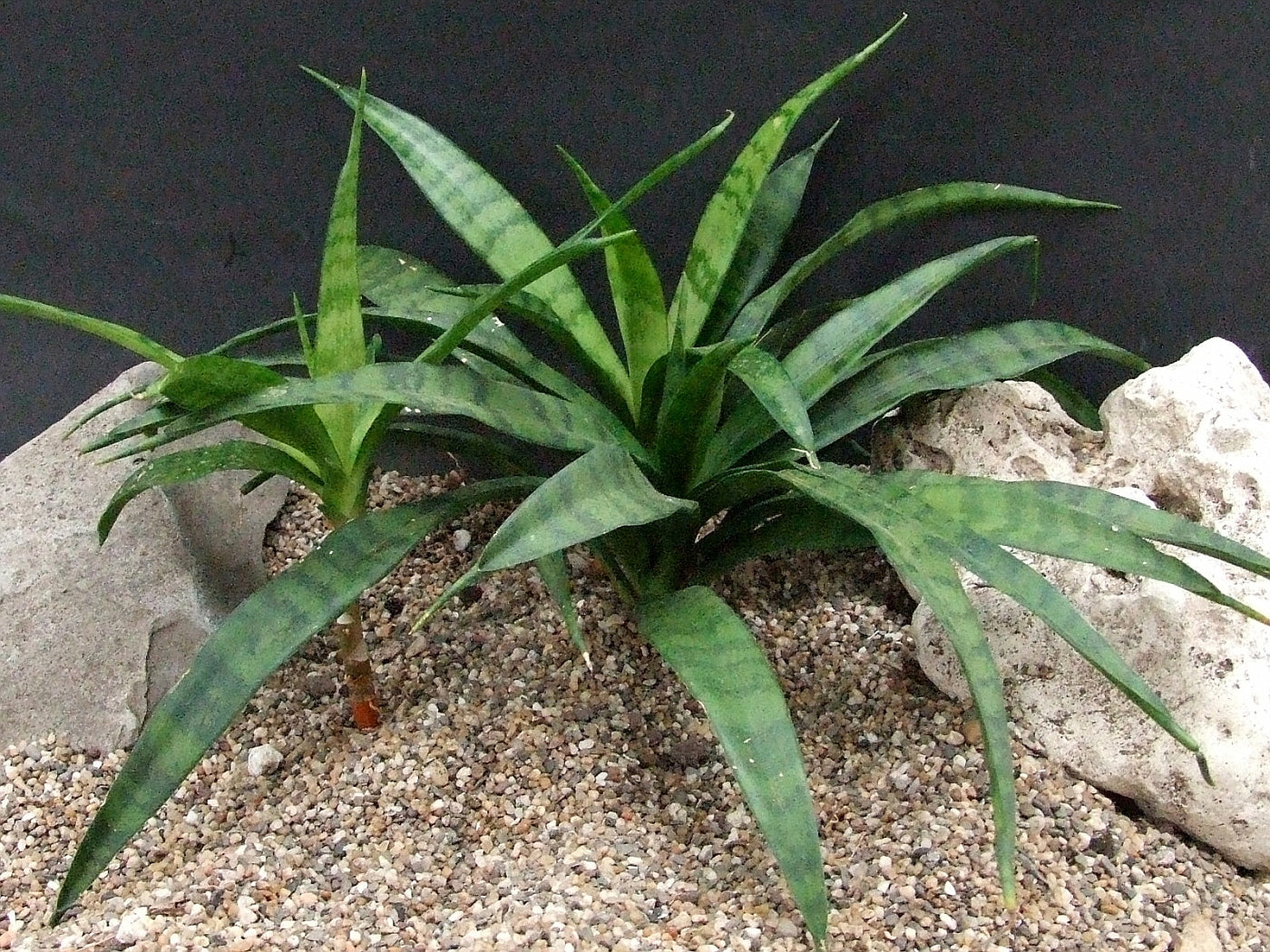


Sansevieria (205)
Sansevieria (205)
Couldn't load pickup availability
ALL THE PLANTS WILL BE SENT BAREROOTED. NO POTS. NO SOIL
The Sansevieria, widely known as the Snake Plant or Mother-in-Law's Tongue, is a popular and remarkably resilient houseplant cherished for its sculptural, upright foliage and low-maintenance nature. Native to tropical West Africa, this evergreen perennial has earned a reputation as a nearly indestructible plant, making it a perfect choice for beginners and busy plant parents.
Appearance:
-
Foliage: The most striking feature of the Sansevieria is its stiff, sword-shaped leaves that grow vertically from a basal rosette. The leaves are typically dark green with light gray-green cross-banding, resembling snakeskin.
-
Varieties: While the classic
Dracaena trifasciata 'Laurentii'with its yellow-edged leaves is the most common, there is a wide range of cultivars with different shapes, sizes, and colors. Some popular varieties include:-
Sansevieria cylindrica(African Spear Plant): Features thick, cylindrical leaves that can be braided. -
Sansevieria trifasciata 'Hahnii'(Bird's Nest Sansevieria): A compact, dwarf variety with leaves that form a tight, rosette-like shape. -
Sansevieria masoniana(Whale Fin Sansevieria): Known for its single, large, paddle-shaped leaf.
-
-
Size: Snake plants can range in size from a compact 6 inches to over 2 feet tall as a houseplant, and even taller in their native habitat.
Care & Maintenance
The Sansevieria's reputation for being "un-killable" comes from its ability to tolerate a wide range of conditions, but a few simple rules will help it thrive.
-
Light: Snake plants are highly adaptable to various light levels. They can survive in low-light conditions, which is why they are often found in offices and dimly lit corners of a home. However, for optimal growth and to maintain vibrant leaf color and variegation, place your plant in bright, indirect light. An east-facing window is ideal, but a spot near a south or west-facing window is also suitable.
-
Water: Overwatering is the most common cause of death for a Sansevieria. These plants are drought-tolerant succulents, so they prefer their soil to dry out completely between waterings.
-
Frequency: Water sparingly, especially during the winter months. A general rule of thumb is to water every few weeks or once a month, depending on the environment.
-
Method: Water deeply until you see water draining from the bottom of the pot. Discard any excess water from the saucer to prevent root rot. Avoid getting water on the leaves or in the center rosette, as this can lead to rot.
-
-
Temperature: Snake plants thrive in warm temperatures between 70°F and 90°F (21°C to 32°C). They are sensitive to cold and will not tolerate frost, so keep them away from cold drafts and windows during the winter.
-
Fertilizer: Fertilizing is not essential for this plant's survival. You can feed it with a diluted liquid fertilizer for houseplants once every six months during the growing season (spring and summer) to encourage growth.
Soil Preparation
The key to a healthy Sansevieria is well-draining soil that mimics its arid, native environment.
-
Type: Do not use regular potting soil alone. A specialized cactus and succulent mix is the best option.
-
DIY Mix: You can create your own mix by combining standard potting soil with inorganic materials that improve drainage. A good recipe is:
-
1 part potting soil
-
1 part perlite
-
1 part coarse sand or pumice
-
-
Pot: Ensure your pot has a drainage hole to prevent water from pooling at the bottom and causing root rot. A terracotta pot is an excellent choice as its porous material helps to wick away excess moisture from the soil.
Propagation
The Sansevieria is one of the easiest houseplants to propagate, allowing you to create new plants from a single parent. There are two primary methods:
-
Leaf Cuttings:
-
Cut a healthy, mature leaf from the base of the plant using a clean, sharp knife.
-
Cut the leaf into 2-3 inch sections. For best results, cut a small, upside-down "V" at the bottom of each cutting to increase the rooting surface area.
-
Allow the cuttings to callous (dry out) for a day or two.
-
Insert the cuttings cut-side down into a pot with a well-draining soil mix.
-
Place in a warm, brightly lit location and mist lightly every few weeks. Be patient, as this method can take several months to produce new roots and shoots.
-
-
Division:
-
Carefully remove the entire plant from its pot.
-
Examine the root ball and identify the rhizomes (underground stems) that connect the plants.
-
Using a clean knife or your hands, gently separate a section of the plant that has its own leaves and roots.
-
Replant the new division in its own pot with fresh, well-draining soil. This is the fastest and most reliable method, as you are simply separating an already established plant.
-
#SEO #HouseplantCare #Sansevieria #SnakePlant #IndoorPlants #PlantLover #EasyCarePlants #Succulent #AirPurifyingPlants #GardeningTips