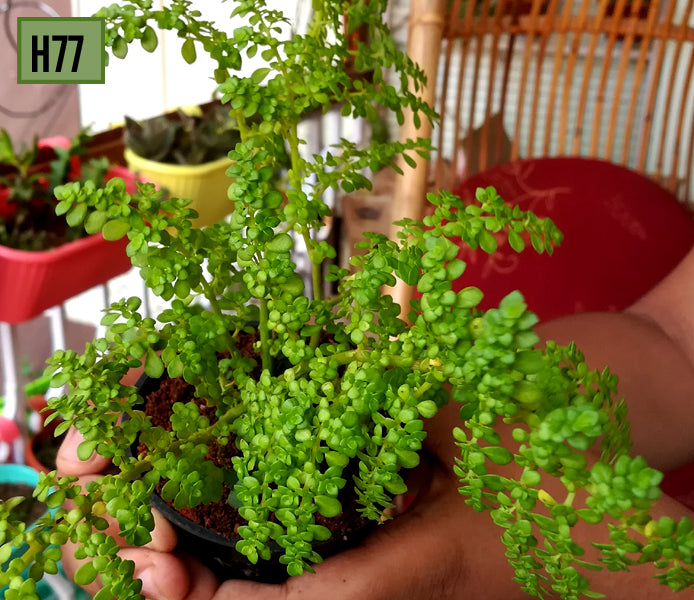


Pilea serpyllifolia
Pilea serpyllifolia
Couldn't load pickup availability
ALL THE PLANTS WILL BE SENT BAREROOTED. NO POTS. NO SOIL
Pilea serpyllifolia, a lesser-known but charming member of the Pilea family, is an excellent choice for a houseplant, terrarium, or even a miniature garden. Known for its delicate, creeping stems and small, round leaves, this plant creates a beautiful, lush ground cover effect. Unlike some of its more common relatives, such as Pilea peperomioides (the Chinese Money Plant), Pilea serpyllifolia is a ground-dwelling herb that adds a unique texture to any plant collection.
Growing Tips
Pilea serpyllifolia is a relatively easy-to-grow plant that thrives with a bit of attention to its specific needs. The key is to replicate its native tropical environment.
-
Light: This plant loves bright, indirect light. Placing it in an east or north-facing window is ideal. Direct sun, especially during the hot afternoon, can scorch its delicate leaves, causing them to turn brown and crispy. If you're using a south-facing window, set the plant back a few feet or use a sheer curtain to filter the light.
-
Temperature: As a tropical plant, Pilea serpyllifolia prefers warm temperatures. It thrives in a range of 65-85°F (18-29°C). Keep it away from cold drafts and sudden temperature changes, which can stress the plant. Avoid temperatures below 50°F (10°C) as this can be detrimental to its health.
-
Watering: Water is a crucial factor for this plant. It prefers consistently moist, but not soggy, soil. The best practice is to water when the top inch of soil feels dry to the touch. It's better to slightly underwater than to overwater, as a waterlogged environment can quickly lead to root rot. Always ensure the pot has drainage holes to allow excess water to escape. Use filtered water or rainwater if possible, as it can be sensitive to chemicals in tap water.
-
Humidity: While many Pilea species are tolerant of average household humidity, Pilea serpyllifolia with its thinner leaves appreciates a more humid environment. You can increase humidity by using a pebble tray with water, grouping it with other plants, or using a humidifier. It also does exceptionally well in a terrarium where a high-humidity microclimate is naturally maintained.
Soil Preparation
The right soil mix is essential for a healthy Pilea serpyllifolia. A well-draining, rich, and airy potting mix is the best choice.
-
Components: A standard indoor potting mix can work, but you can enhance it by adding perlite, orchid bark, or coarse sand to improve drainage and aeration. A good ratio is a mix of two parts potting soil to one part perlite or a similar amendment.
-
pH Level: This plant prefers a slightly acidic to neutral soil pH, typically between 5.0 and 6.0.
Propagation
Propagating Pilea serpyllifolia is a straightforward and rewarding process, making it a great plant to share with friends.
-
Stem Cuttings: The most common and effective method is by taking stem cuttings.
-
Select a healthy stem about 3-4 inches long with several leaves.
-
Use clean, sharp scissors or a knife to make the cut just below a leaf node (the point where a leaf grows from the stem).
-
Remove the lower leaves to prevent them from rotting in the water or soil.
-
You can place the cutting directly in a jar of water. Change the water every few days. Roots should begin to form within a couple of weeks.
-
Alternatively, you can plant the cutting directly into a small pot with a well-draining soil mix. Keep the soil consistently moist and the environment humid to encourage rooting.
-
-
Division: Since this plant grows in a spreading, mat-like form, you can also propagate it by carefully dividing the plant. Gently pull apart a section that has its own established roots and pot it in new soil.
#PileaSerpyllifolia #PlantCare #HouseplantTips #PlantPropagation #IndoorGarden #TerrariumPlant #PileaLove #GrowingPlants #GreenThumb #PlantLife #HomeDecor #Botanical #UrbanJungle